About Darko Tomic
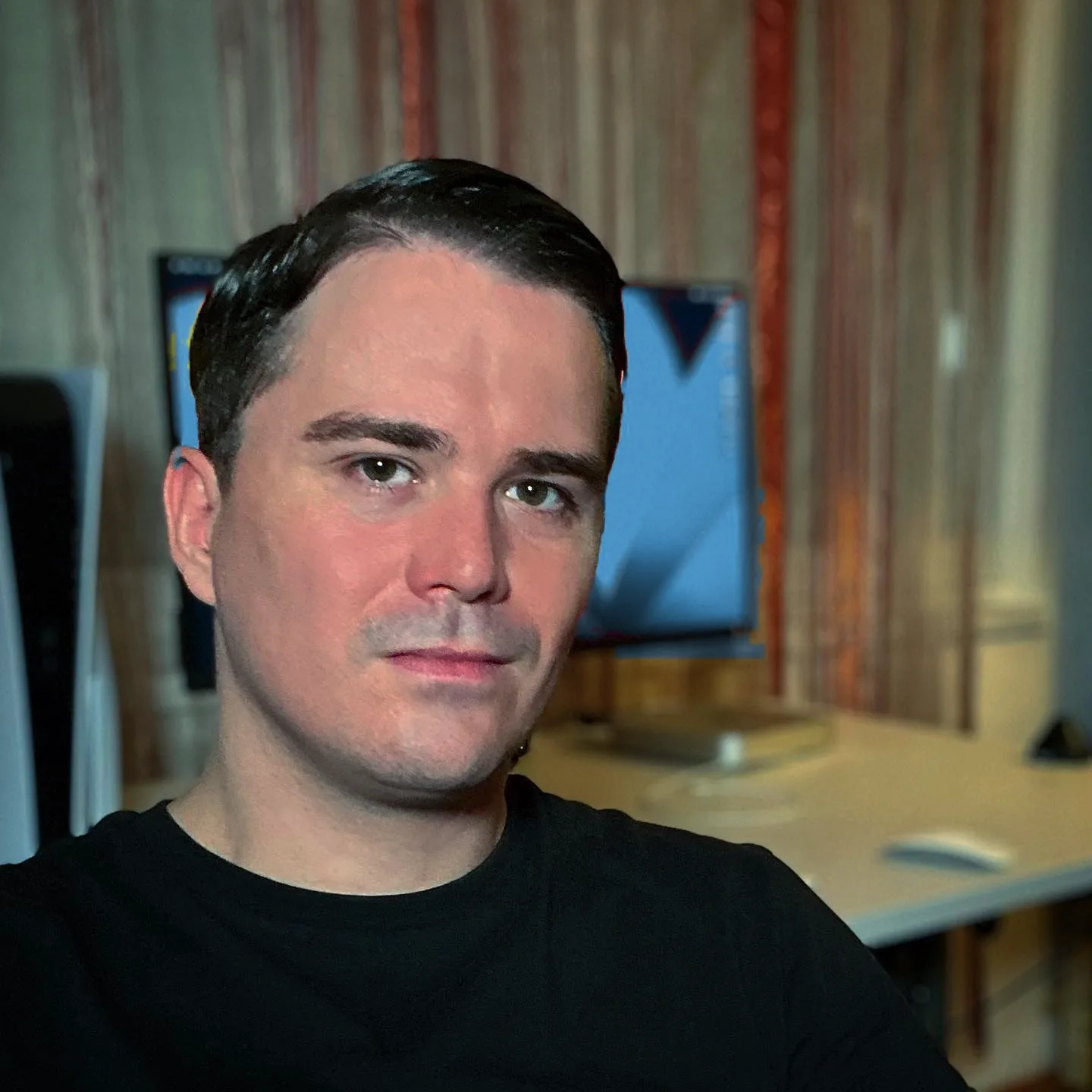
I'm Darko Tomic, a Unity developer. I'm not a teacher, I work in the industry. I work full time as a programmer and run my own company, TOMICZ. I've worked with Unity for 11+ years, and right now I'm building Project DarkBlack on my own engine, TOMICZ3D.
On the side, I tutor game programming 1-on-1 on Google Meet, for teens 13 and up and adults. AI amplifies an experienced developer, but for a beginner it can be devastating. My students write the code, and I correct it while they write. I live in Bosnia and Herzegovina, and after school and weekends in the US are easy to book.
If you're a parent, start with how I work with students under 18. Tutoring for adults has its own tutoring page. Either way, you can book a free 15-minute intro call.
How It All Started
From a young age, around 5, I was glued to a computer. I always loved them, and people knew me as the kid who was good with them. I was playing video games, Warcraft III and DotA, and I was making my own Warcraft III maps. But just being good with computers was never enough for me. I wanted to go deeper, the way the people heading off to university got to, spending their days learning the thing I cared about most.
Since I was a little kid I believed I wasn't smart enough, that I would never do anything with my life. I was never good at school, and I ended up in a 3-year car mechanic school, which doesn't qualify you for university.
So at 18 I had to find a job at a local textile factory. Working there made me realize I was not made for this, and at the same time, I realized I was not stupid. That's the moment I understood everything is possible to learn.
Thanks to the internet, I learned I could learn programming on my own. I started watching tutorials on YouTube and spent days on forums and Reddit. I was always asking why. I picked games because I played them my entire life, so it was a logical step. I installed Unity, and here I am.
When I started, there was nobody to guide me. I had no idea what to learn or how to learn, so I was just watching random YouTube tutorials. At the time I thought I was doing the right thing, and to some degree, I was. But I lost a lot of time to trial and error, and I wrote the full story in How I learned Unity the wrong way.
Discovering AR
There was talk going around at the time about augmented reality (AR) becoming the next trillion-dollar industry. I started experimenting and discovered Vuforia, an engine and SDK that lets you render 3D objects in AR. What I realized was that most AR projects were just demos nobody cared about. So I stepped in.
I started figuring out what people would actually love to see in AR. Most AR stuff at the time was a gimmick. You'd render a 3D object on a business card, look at it for three seconds, say "awesome," and never open it again.
What I built was a game called Skeletons AR, a survival shooter in AR. In January 2018 I dropped a video of it on r/gamedev, the biggest game developer subreddit then and now, and the video exploded. It ended up as the #1 post of all time on r/gamedev.
The trailer for my 2022 remake of Skeletons AR.
Companies started contacting me. Everyone at that time thought AR was about to take over the world, and everyone was looking for developers. I did gigs for startups across Europe and the US.
The one that stood out the most was a Croatian marketing agency called MediaKing. They hired me, and we built AR games and demos for Coca-Cola and Fanta. I built AR tracking on a cylindrical Coca-Cola bottle, so you could point your phone at a Coke bottle and a game would render on it and let you play. It was wild.
The Boom Years
Deep down, I knew AR was never going to be that big. It was too hard to get people to adopt it. AR takes a screen, just to look at another thing, and I understood early that people prefer their 2D screen.
So I didn't just focus on AR. I didn't want to be known only for AR, or to limit myself to a single tech. I worked on some really great projects where I learned networking, asset management, memory management, UI and UX development, game mathematics, gameplay mechanics, C#, and more. Most of it was gig work for clients and companies.
Then early 2020 hit and COVID happened. People were stuck at home, and the Metaverse blew up. I was the perfect fit at the time, and companies competed with each other to hire me. And that's how I got hired at Auki Labs.
Auki Labs

Auki Labs is the company that shaped me into the developer I am today. I was a Senior Unity Engineer there, working on AR multiplayer technology with the best developers I've ever worked with. For the first time, I felt like I was improving beyond my limits. It was a very competitive atmosphere, and that pushed me hard. I can't explain how much I learned there.
Most game companies use third-party networking solutions, which is fine most of the time. At Auki Labs, they built one of the first AR multiplayer systems that made AR apps easy to connect with other players. They pioneered technologies like mobile hand tracking, AR networking, asset streaming, and their own AR games, like Floorcraft: Blasters, a multiplayer AR game. Today I work on the game as an open source developer.
Working there felt amazing. I felt like I was on top of the world. It was a remote position, but after COVID the world started to open back up, and relocating to Hong Kong became mandatory, which wasn't realistic for me. So we parted ways, but all the best practices I talk about in my blog posts and videos come partly from my experience there.
YouTube
I took some time off after that. Months later, I got active on my YouTube channel. It was never a big channel, but it had a big impact. That was thanks to my prior experience, because I knew what problems other game developers had and talked about them openly. My video Why Most Unity Tutorials Are Bad called out the problem with tutorials, and people related to it.
People asked me when the next video was coming, and they were grateful for my content. I taught a lot of new developers how to think like a programmer. My C# tutorial on interfaces is my favorite one, because people watch 20 videos on interfaces and it's never clear how they work.
My content was different, and people liked it, but I just couldn't make enough. One video took 40 hours at the quality I was doing. I had to work on the paid projects I was hired for, so I couldn't focus on YouTube, which I kind of regret today.
AI was also getting better, and people watched tutorials less and less, which affected everyone's content. That's one reason I didn't continue. The other is that I work full time as a programmer. In October 2026 I posted new videos about the game I'm building on my own engine.
TOMICZ, The Start of a New Era
I moved away from gig and freelance work to B2B contracts and started my own company, TOMICZ.
Even after starting the company, I was still a programmer first, a technical founder. I became more competitive than ever. I learned new languages and started building websites, and both the TOMICZ site and darkounity.com are built by me personally. I also adopted AI in my workflows, because that's just the way it is.
At darkounity.com, I'm researching how beginners can learn in the age of AI. Beginners today spend months building things, but they have no idea how any of it works, and companies aren't going to hire them over a candidate who actually knows how to program. So I built a Unity Learning Roadmap that shows you the exact next step you need to follow to become a Unity developer. My goal is to build the biggest Unity learning community, and I'll combine it with YouTube tutorials and articles.
I also offer 1-on-1 tutoring for those who want real direction. I tutor experienced developers too. If you already build games in Unity, we skip the basics and work on your own project.
What I'm Building Now
The game I'm building now is Project DarkBlack, a realistic open-world survival game running on TOMICZ3D, a game engine I'm writing from scratch in C++. Project DarkBlack is a working title. The video shows it growing from a few cubes on a grid into a mountain valley you can drive through, and you can see more in my portfolio.
How I Work with Students Under 18
I tutor kids 13 to 17, in middle school or high school, and no coding experience is needed to start. Their priorities and goals will likely change as they get older, so I follow what they are excited about now instead of pushing a plan on them. Besides Unity, I also tutor Roblox, Unreal and Godot, so we start wherever your child is.
If your child is under 18, please book the sessions yourself with your own email, so the Google Meet link and every confirmation come to you. You are welcome in any session, with no notice and no need to ask. I don't record sessions, and everything outside the session goes through your email rather than a private channel with your child. You can reach me any time to talk about how they are doing, and if anything ever worries me, I will come to you first. If you would like to see a police clearance certificate before we start, just ask and I will send you one.
He's very knowledgeable, easy to work with, encouraging, and never made me feel stupid for not knowing something.
So far I've tutored more than 50 students, and students' reviews are on the reviews page. Everything else a parent wants to know is on the tutoring for teens page.
Full refund after the first session if it's not a fit.
Frequently Asked Questions
What is Darko Unity?
Darko Unity is Darko Tomic's Unity and C# learning community at darkounity.com. It helps developers of all backgrounds learn Unity properly in the age of AI.